The transition from middle school to high school is a significant moment for students, affecting them academically, socially, and emotionally. This year, the Camas School District is renewing its focus on vertical teaming to better support students as they progress from eighth grade to ninth grade.
Although vertical teaming isn't new to the district, this effort demonstrates a renewed commitment to collaboration across grade levels. The goal is to better align middle and high schools, helping students feel more consistent, confident, and a stronger sense of belonging as they transition to high school.
“This work is about ensuring students don’t feel like they’re starting over when they reach high school,” said Superintendent John Anzalone. “We want systems that support them academically while also helping them feel known and supported.”
A Focus on Core Instruction
The district’s Vertical Teaming Plan unites middle and high school educators to evaluate Tier 1 instructional practices, which are the core classroom strategies that support all students. These practices include clear learning objectives, active student participation, differentiated instruction, and consistent classroom routines.
Teacher leaders are using shared frameworks, including Universal Design for Learning and the Marzano framework, to reflect on what is working well and where adjustments may be needed. A key focus is ensuring that instructional practices are aligned across schools, so students encounter fewer barriers as expectations shift in high school.
Educators are guided by reflective questions like:
Who benefits from our current system, and who does not?
What consistent experiences should all eighth and ninth-grade students have?
“These conversations help us understand the student experience more clearly,” said Katie Seidl, Assistant Director of Learning and Development. “When we examine and align our practices, we reduce confusion and help students focus on learning instead of adjusting to new systems.”
Learning Together Across Schools
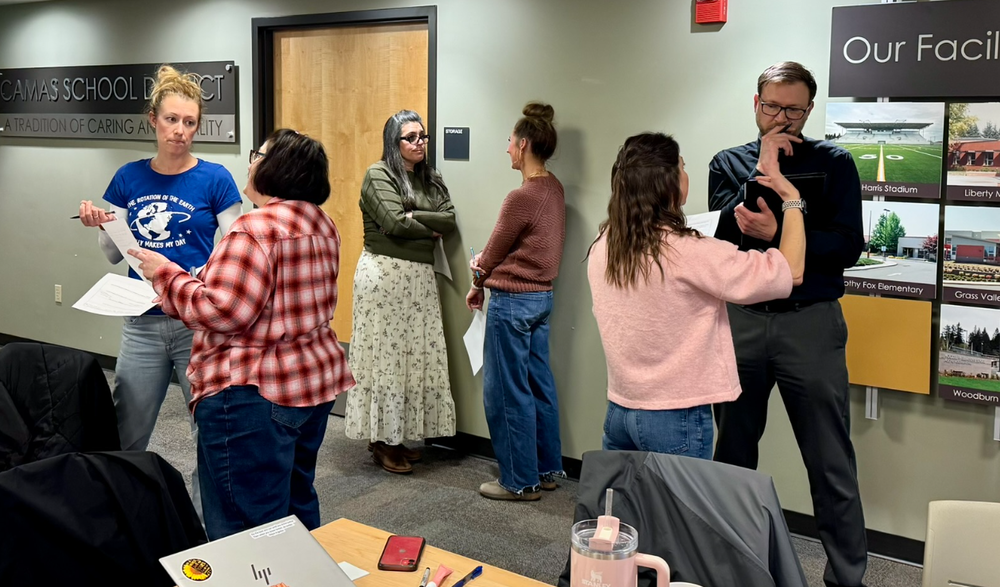
The work began with a January orientation for teacher leaders, followed by learning walks in February and March. These shared classroom visits allow educators to truly step into middle and high school learning environments, an experience many have not had together in several years. By observing instruction across grade levels, teachers reflect on practice, learn from one another, and engage in meaningful conversations about the student experience.
In March, principals and teacher leaders will come together for a Vertical Teams Workshop to synthesize what they’ve learned and identify instructional practices to stop, keep, or start. This collaborative work also includes examining key shifts students experience, such as the transition from standards-based reporting in middle school to letter grades in high school. Throughout the process, the district is intentionally centering teacher expertise and creating time and space for educators to learn with and from one another, strengthening practices so all Camas students benefit.
Looking Ahead
This effort aims to create a lasting impact. Next steps involve identifying a prioritized set of Tier 1 instructional practices for all eighth and ninth-grade classrooms and supporting ongoing professional development led by teacher leaders.
The district also plans to explore expanding vertical teaming to other transitions in the future. Although future work may involve the transition from elementary to middle school, that phase has not yet started.
By investing in collaboration and shared learning, Camas School District is reinforcing the connection between middle and high school, helping students feel supported, confident, and prepared for what lies ahead.